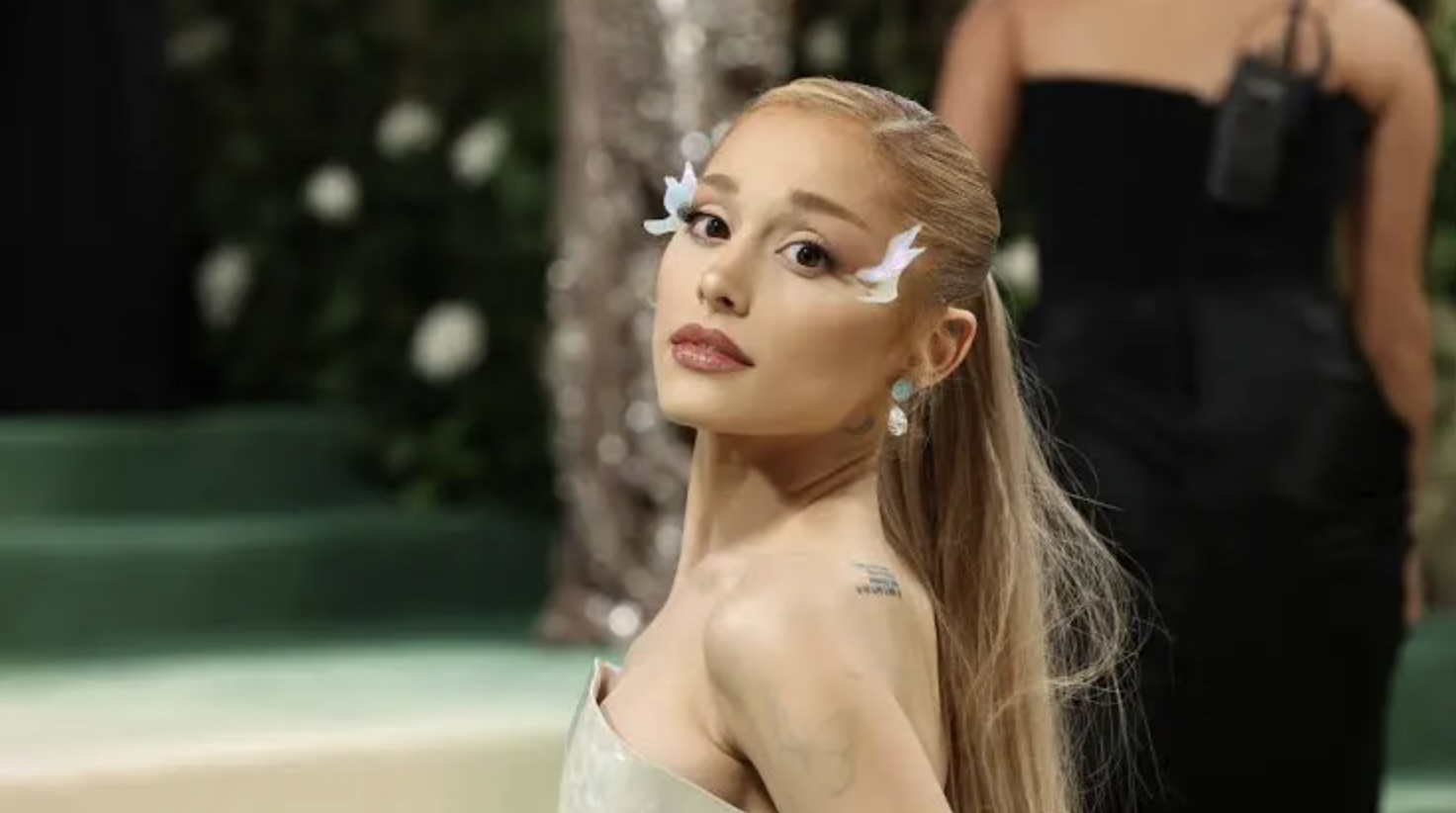


At some point in the last decade, the most interesting thing a pop star could do stopped being making a great album. Music became world building but it is one entry point among many now. Alongside the fragrance and the visuals and the color palette and whatever other spokes off of the art exists. Some artists drift into the machine accidentally by being a yes man. Ariana Grande made it a business move years ago, and just recently made it a little more real.
In April 2026, she announced BabyDoll Music, her own imprint label under Republic Records, through which her eighth album petal will be released and all future work will be owned outright by her. The industry response was the usual mix of admiration and questioning how it affects all other brands. BabyDoll Music proved it’s a business structure and a cultural statement at the same time.
BabyDoll Music is named after Ariana’s grandmother, Marjorie “Nonna” Grande, who used the word as a nickname for her granddaughter.
It is also, almost perfectly, the right name for everything Ariana has been building. Soft and personal and a little nostalgic, feminine without being precious, intimate without trying too hard.
The business side, which is actually the interesting part
BabyDoll Music operates as a sub-label under Republic Records which means Ariana keeps her distribution and promotional partnership with one of the most powerful labels in the world. Plus starting with petal, she owns her masters on all future projects. Everything going forward belongs to her company and is exclusively licensed to Republic rather than owned by them. Her back catalog stays with Republic, but from here on, she controls what she makes.
This is the outcome Taylor Swift spent years in public conflict trying to reach. Ariana got there through a renegotiated deal timed at the peak of her leverage, coming off Eternal Sunshine, her sixth number one album, and the runaway cultural moment of Wicked. Artists who own their masters own their futures in a way that artists who do not simply cannot, and the income difference over a long career is not an abstract thing. BabyDoll Music is, among other things, a financial decision with generational stakes.
What it enables creatively is total control over how her work gets to exist going forward, and that is the more interesting half of the story.
What BabyDoll says about where things are going
Ariana is not the first artist to launch an imprint or build a lifestyle brand alongside her music.
What makes Ariana Grandes BabyDoll Music worth paying attention to is how complete the vision behind it is because it doesn’t seem to be a vanity label or a tax structure. It is the structure an artist builds when her identity has become so specific and so coherent that the traditional industry apparatus simply runs out of things to offer her except distribution and money, and she already has both.
If BabyDoll ever signed other artists, which is speculative but fun to think about, the roster writes itself. Feminine and precise, emotionally literate, capable of building real audience and working with artists that fit the same mold as Ari (Cynthia Erivo?! Chappell?!).
With all said and done-
There is a version of this story that gets told as a power narrative, with chart positions and streaming numbers and cultural footprint measured in column inches but Ariana has all of that. She built it through a completely different register, though. Ariana Grandes BabyDoll Music’s launch say something about how power and wealth actually accumulates when you build a world and proprietary IP.