


Is it me, or is every TikTok now starting with “What is Perimenopause” and selling me a serum? The irony is that for something that affects every single woman, it is one of the least talked about transitions in medicine. We’re fixing that right now.
What to Know About Perimenopause
If you are in your late 30s or early 40s, you may notice you start to feel a little off in ways that are genuinely hard to explain. Your period shows up three weeks after it was supposed to, or it’s heavier than it’s ever been, or lighter, or both in the same month. You’re not sleeping the way you used to. You feel irritable in a way that feels abnormal.
If you’ve found yourself wondering what is perimenopause and whether any of this applies to you, the answer is probably yes, and the reason nobody mentioned it sooner is not because it isn’t common. It’s because we have a long and unfortunate history of not telling women what is actually happening in their own bodies. (If you’re interested in a maddening feminist book on that topic, click here.)
What Is Perimenopause?
Perimenopause is the transition your body goes through before menopause, and it can start as early as your mid-30s, though most women start noticing changes in their 40s. It happens as your ovaries gradually reduce estrogen production, and it can last anywhere from a few years to a decade. Menopause itself, the milestone everyone has actually heard of, is technically just one moment in time, the point at which you have gone twelve consecutive months without a period. Everything leading up to that is perimenopause, and that stretch is where most of the experience actually lives.
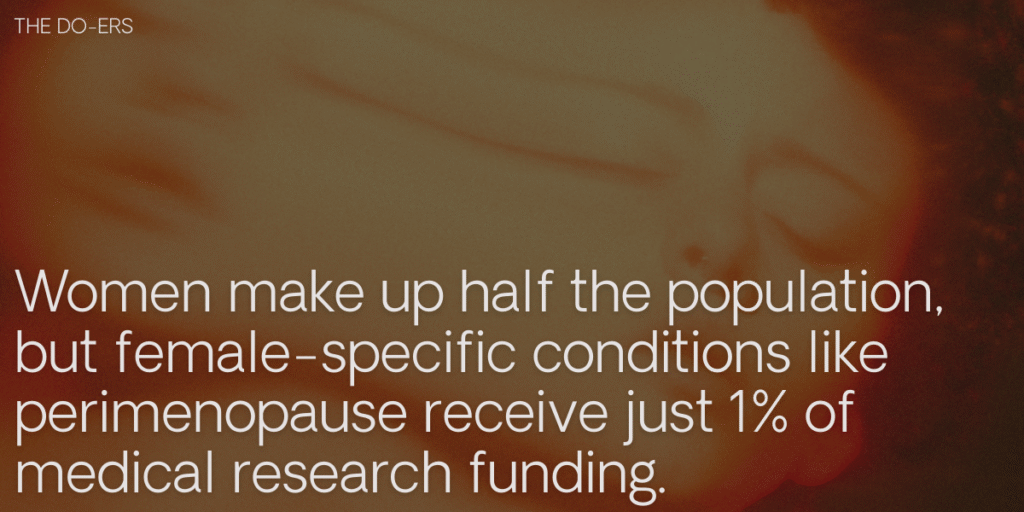
So why haven’t you heard of it? Women make up half the population, but female-specific conditions like perimenopause receive just 1% of medical research funding. That likely has something to do with it.
What Are the Symptoms of Perimenopause?
The symptoms are wide-ranging enough that they’re easy to attribute to basically anything else, which is part of why so many women spend years not connecting the dots. Irregular periods are usually the first sign, with cycles becoming longer, shorter, heavier, or lighter, sometimes varying month to month with no predictable pattern. Beyond that, the list includes hot flashes, night sweats, trouble sleeping, mood changes, joint pain, low libido, vaginal dryness, and weight gain particularly around the midsection. Between 40 and 60 percent of women going through the menopause transition report cognitive symptoms including brain fog, difficulty remembering words and names, and trouble focusing and concentrating. That last one tends to catch women off guard because it doesn’t get talked about the way hot flashes do, and it can feel alarming when you’re in the middle of a meeting and cannot locate a word you have used a thousand times.
How Is Perimenopause Diagnosed?
What makes perimenopause particularly disorienting is that there is no clean test for it. Unlike most health conditions, there is no definitive test that confirms you’re in this transition. Healthcare providers mainly diagnose it by evaluating your age, symptoms, and medical history, since hormone levels fluctuate so much during this time that blood tests are often unreliable. Which means a lot of women go to their doctor, get told their bloodwork looks fine, and leave without answers. If that has happened to you, it is worth going back and specifically asking about perimenopause, ideally with a provider who specializes in women’s hormonal health.
What Can You Do About It?
Perimenopause doesn’t have to just be endured or something to cause suffering. Lifestyle changes around sleep, exercise, and diet all have real evidence behind them. If your day-to-day life is being impacted, it’s worth seeing an OB/GYN, preferably one who specializes in menopause, to get a proper workup and discuss your options. The best thing we can do for each other is talk about it honestly, because the medical system has made clear it isn’t going to do that for us.